
Kash Flower Field Photo Prompt for a Natural Summer Look
Featured image for: Kash Flower Field Photo Prompt for a Natural Summer Look
Have you ever seen those photographs where everything feels bright, peaceful, and completely natural? A clear blue sky, soft white flowers stretching across a field, warm sunlight, and a simple outfit can create a photo that feels like a real summer memory.
That is the idea behind this Kash flower field photo concept. If you’re experimenting with a chatgptprompt for creating a natural outdoor portrait, this style is a great example of how a simple location and natural lighting can completely change the mood of a photograph.
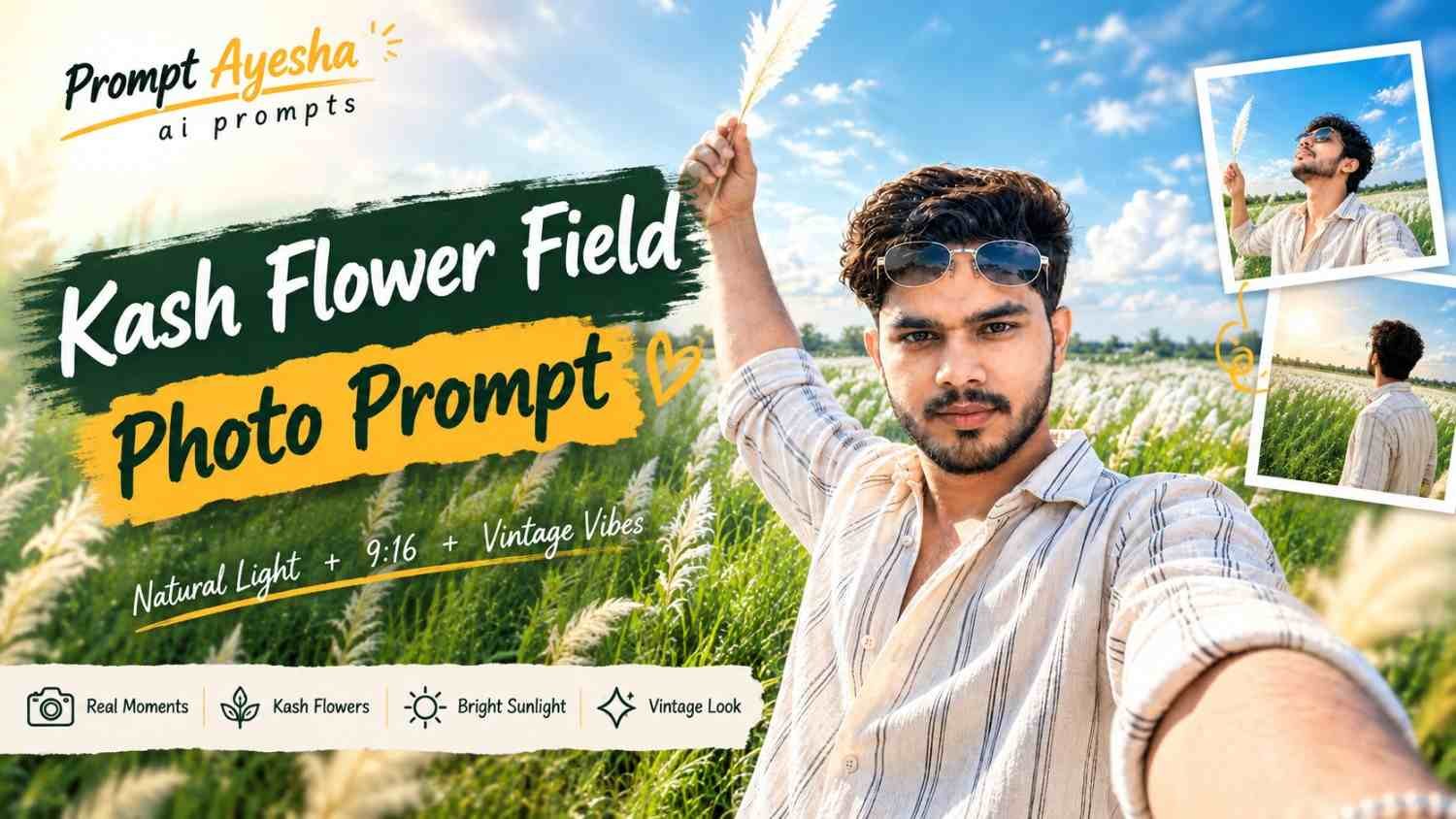
The concept places a young man in a beautiful field filled with white Kash flowers. He is wearing a light-colored striped shirt with sunglasses and holding a single white Kash flower in his raised hand. The bright blue sky, scattered clouds, green field, and sunlight create a fresh and cheerful atmosphere.
Rather than making the image look heavily edited, the goal is to create something that feels like a genuine photograph taken during a sunny day outdoors.
Why Kash Flowers Make a Beautiful Background
Kash flowers are one of those natural elements that can instantly make an outdoor photograph look more interesting.
Their soft white appearance creates a beautiful contrast against green grass and a deep blue sky. When sunlight falls across the flowers, the entire background can appear bright and airy.
A large flower field also gives the photograph plenty of depth. The flowers in the foreground can appear detailed, while those farther away gradually become softer toward the horizon.
This makes the person stand out without requiring a complicated background.
The Bright Blue Sky Sets the Mood
The sky is another major part of this composition.
A rich blue sky with a few soft white clouds gives the image a cheerful daytime feeling. The sunlight coming from the upper-left side adds warmth and natural highlights to the subject.
Instead of using dramatic studio lighting, the photograph relies on outdoor sunlight.
This makes the final image feel more spontaneous and suitable for someone looking for a natural travel or lifestyle photography aesthetic.
The Pose Keeps the Photo Casual
The pose is intentionally simple.
The subject holds a single Kash flower above his head while looking toward the camera. His other arm extends toward the camera, creating the feeling of a selfie or close-up outdoor photograph.
The sunglasses resting on the forehead add another casual detail.
Nothing about the pose needs to feel overly formal. The idea is to capture someone enjoying a sunny day in a field rather than posing for a professional photoshoot.
Small details like the rolled sleeves, relaxed posture, and simple shirt help maintain that everyday appearance.
Choosing the Right Outfit
The light-colored striped shirt works particularly well against the green and white background.
Because the Kash flowers are mostly white, a neutral or light outfit helps maintain the soft color palette without competing with the scenery.
The sunglasses provide a small darker element around the face, adding contrast to the otherwise bright composition.
You don’t necessarily need an elaborate outfit for this type of photograph. Simple clothing can actually work better when the location itself is visually strong.
Natural Sunlight Makes a Big Difference
One of the strongest elements of this concept is natural sunlight.
The sun is positioned toward the upper-left portion of the scene, creating bright highlights and a subtle lens-flare effect. The light also gives the flowers a glowing appearance.
Natural sunlight can make outdoor portraits feel much more realistic because it creates natural shadows and highlights across the face and clothing.
The important thing is to keep the lighting consistent throughout the image. The subject and background should appear to be photographed under the same conditions.
The Complete Prompt
If you want to recreate this concept using your own reference photograph and the Kash flower field background, use the following prompt exactly:

Use my uploaded photo as the exact identity and pose reference. Preserve my face, facial features, hairstyle, skin tone, body proportions, outfit, camera angle, posture, and hand placement exactly without any changes. Place me naturally into the provided Kash flower field background, keeping the original background composition unchanged. Add one natural white Kash flower in my hand. Match the background’s sunlight direction, shadows, brightness, color temperature, perspective, depth, and overall green-blue color grading. Blend me seamlessly with realistic edges, natural lighting, and photorealistic detail. No face change, distortion, or artificial look.
How to Use Your Own Photo
If you’re trying this concept with an image-generation tool that supports reference images, start with a photograph where your face and body are clearly visible.
The reference image gives the tool more information about your appearance, pose, clothing, and framing.
The background image can then provide the environment you want to recreate.
For the best result, pay attention to the direction of the sunlight in both images. If the reference photograph has dramatically different lighting from the background, the final composition may look less natural.
The prompt specifically asks for the lighting, shadows, perspective, and color temperature to match, which helps create a more consistent result.
Keep the Background Natural
The Kash flower field should remain the main environmental feature.
A common mistake with background replacement is changing too many things at once. If the original background already has a beautiful composition, keeping it relatively unchanged can make the final image look more believable.
The horizon, flower density, sky, distant trees, and sunlight all contribute to the overall atmosphere.
The goal is to make the person appear as though they were actually photographed in that field.
Matching Colors and Lighting
Color matching is especially important when combining a person with a different background.
For example, if the subject was originally photographed under warm indoor lighting but the new background has cool outdoor daylight, the two elements may not naturally fit together.
This concept uses a bright green-and-blue color palette with white flowers and warm sunlight.
Matching these characteristics helps the subject feel like part of the same photograph rather than something simply placed over another image.
If you’re experimenting with a gemini prompt for this type of image editing, pay close attention to the reference image and background relationship. Consistent lighting and perspective are often just as important as the subject itself.
Creating a Photorealistic Result
The objective is not to make the image look like an illustration.
Natural skin texture, realistic shadows, accurate proportions, and believable edges are important for maintaining a photographic appearance.
The prompt also specifically asks for no artificial look, face distortion, or unnecessary changes.
When using a reference photograph, it’s generally better to keep the instructions focused on the elements you actually want to preserve or change.
For example, if your face, hairstyle, and clothing already look the way you want, there is no need to add unnecessary instructions that could cause the appearance to change.
A Simple Outdoor Photography Idea
This type of image can work for many different uses.
You could use it as a social media profile picture, Instagram post, story image, travel-style photograph, seasonal post, or simply as a creative experiment with your own photos.
At Prompt Ayesha, the idea behind an ayesha prompt is to make creative image concepts simple enough for anyone to experiment with, even if they don’t have professional photography equipment.
You can also try the same visual idea with different natural backgrounds such as mustard fields, sunflower fields, beaches, mountains, or open grasslands.
The location changes the mood, but the basic approach remains similar: preserve the subject while creating a believable environment around them.
Why Vertical Photos Work Well
The original composition uses a vertical format, which works particularly well for mobile screens.
A vertical frame provides enough space for the sky above the subject while also showing the flower field below.
It also works naturally for Instagram Stories, Reels covers, Pinterest content, and other mobile-first platforms.
When creating a vertical image, make sure the subject doesn’t occupy the entire frame. Leaving some room around the person allows the flowers and sky to contribute to the overall composition.
Final Thoughts
A beautiful outdoor photograph doesn’t always need complicated styling or an expensive location.
Sometimes a simple shirt, a single white flower, natural sunlight, and a wide field can create a memorable image.
This Kash flower field concept focuses on keeping the subject recognizable while placing them naturally into a bright and peaceful outdoor environment. The blue sky, white flowers, green grass, and warm sunlight work together to create a fresh summer-like atmosphere.
If you’re looking for an ai prompt for creating a natural outdoor portrait or experimenting with your own reference photos, this concept is a good starting point.
The most important part is maintaining consistency between the subject and the background. When the lighting, perspective, colors, shadows, and proportions all work together, the final image can feel much more like a real photograph.
Complete Step-by-Step Editing Workflow
- Copy the prompt or preset code using the dedicated copy button above.
- Open your editing tool: Use your preferred AI image or video editing tool.
- Personalize the variables: Adjust the background, clothing, lighting, pose or mood according to your requirements.
- Generate & refine: Generate the image and make additional changes if required.
- Export: Save the final high-quality image for your social media platform.
Prompt Ayesha
The Prompt Ayesha curates practical AI prompts, photo-editing resources, video-editing ideas, and creator-focused tutorials designed to help readers create and edit digital content.